- Faculty Viewpoint: Katie Thomas Assesses the Relatability of Inside Out 2 11/07/2024 10:23:46 AMKatie Thomas, M.S., LMHC, Assistant Director Field Education, Counseling and Behavioral Health Department
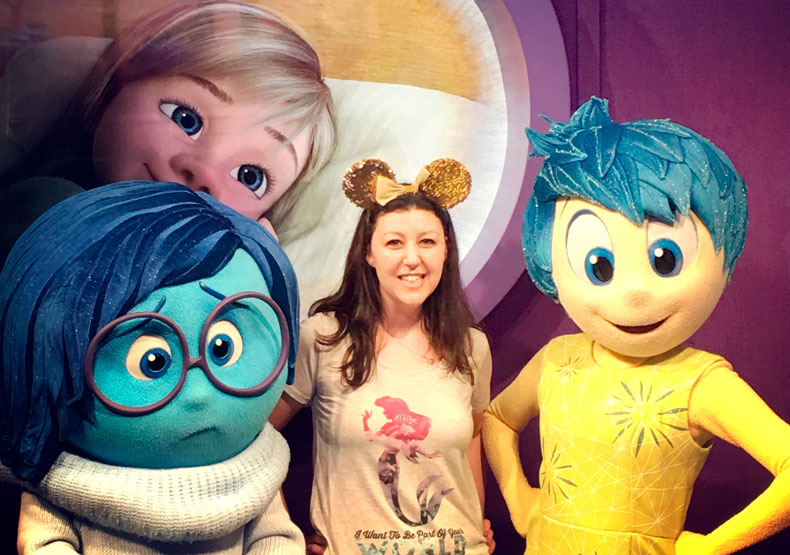 Katie Thomas, M.S., LMHC, with Inside Out characters, Sadness and JoyInside Out 2 was recently added to the Disney+ lineup after a very successful run in theaters this summer, becoming the highest grossing animated film of all time. Based on the prevalence of Anna and Elsa merchandise that still tops holiday wish lists five years after the last film in the franchise was released, it’s surprising that the Inside Out sequel surged past Frozen II at the box office. Now that Inside Out 2 is available to a large audience through a top streaming service, social workers and counselors are sure to use the film’s messaging in therapy sessions with their young clients. After watching the movie, I wondered how many of my clients will see themselves in the central character, 13-year-old Riley who is navigating the often fraught social and emotional transition from girl to teen, from middle school to high school. While books, movies and television programs are powerful tools that can be used in therapy, not all content is a good fit for all clients. In the CommunityIn the Community