
A Guide to Levels of Mental Health Care
By Autumn Cotter, MA, Resource and Referral Counselor, William James College INTERFACE Referral Service
Mental health treatment is not "one size fits all." People experience mental health challenges in different ways, and the level of support they need can change over time. Some individuals benefit from weekly outpatient therapy, while others may require more structured treatment before returning to routine outpatient care.
Mental health care exists on a continuum, with services designed to provide the least restrictive level of care that can safely and effectively meet an individual's needs. Treatment recommendations are based on a person's symptoms, level of functioning, safety concerns, support system, and overall clinical presentation. As symptoms improve, individuals often transition to less intensive services. If symptoms worsen, a higher level of care may be recommended to provide additional support and stabilization.
Understanding the different levels of mental health care can help individuals, families, healthcare providers, and referral specialists make informed decisions about treatment options and what to expect throughout the recovery process.
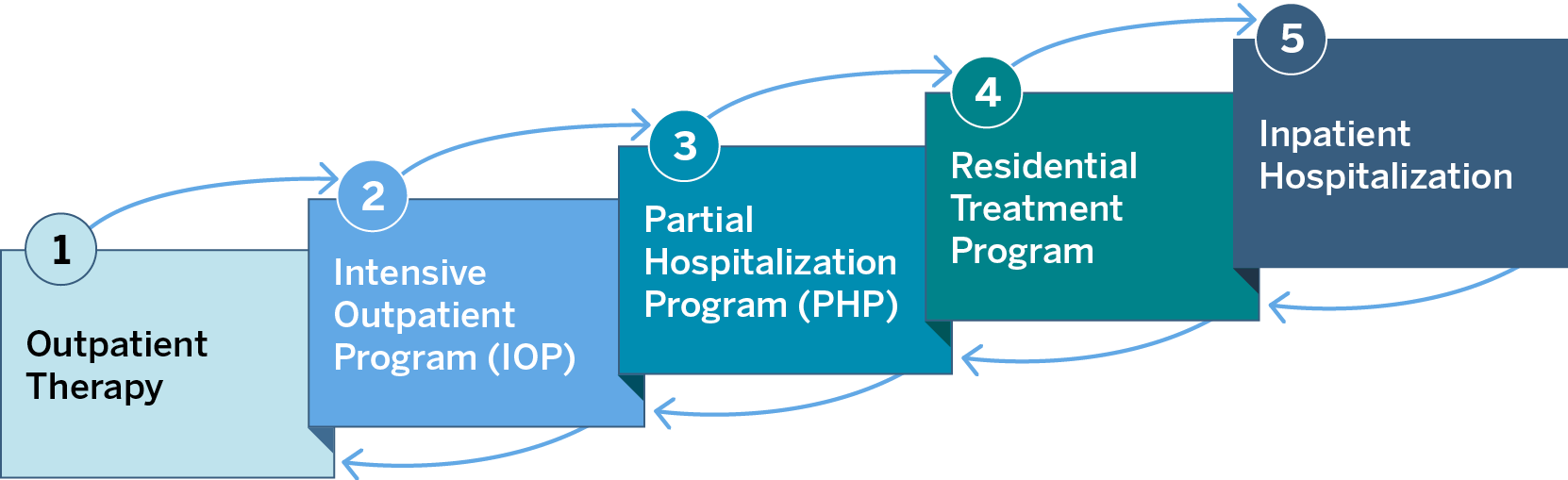
Source: www.thinkhappylivehealthy.com
Inpatient Hospitalization
Inpatient psychiatric hospitalization is the most intensive level of mental health care. It is designed for individuals experiencing an acute psychiatric crisis who require 24-hour medical and psychiatric supervision in a secure hospital setting. The primary goal of inpatient treatment is to ensure safety, stabilize symptoms, begin or adjust medications if needed, and develop a plan for continued treatment after discharge.
Hospitalization may be appropriate when someone is:
- Experiencing suicidal thoughts with intent or plan
- At immediate risk of harming themselves or others
- Experiencing severe psychosis, hallucinations, or delusions
- Experiencing severe mania that significantly impairs judgment or functioning
- Unable to care for their basic needs due to a mental illness
- Requiring emergency psychiatric evaluation and medication stabilization
Treatment during an inpatient stay often includes:
- Comprehensive psychiatric evaluation
- Medication assessment and stabilization
- Individual and group therapy
- 24-hour nursing care
- Safety monitoring
- Discharge planning with referrals to ongoing treatment
Hospital stays are generally brief, lasting several days to one or two weeks depending on clinical needs. Once an individual is stable, they are often referred to a Partial Hospitalization Program (PHP), Intensive Outpatient Program (IOP), or outpatient therapy for continued treatment.
Residential Treatment Programs
Residential treatment provides 24-hour care in a structured, non-hospital setting for individuals who require intensive mental health treatment but do not need the acute medical care provided in an inpatient psychiatric hospital. Individuals live at the treatment facility for the duration of the program while participating in comprehensive therapeutic services throughout the day.
Residential treatment may be appropriate for individuals who:
- Have significant mental health symptoms that interfere with daily functioning
- Require more support than outpatient services can provide
- Are stepping down from inpatient psychiatric hospitalization but are not yet ready to return home
- Need a structured environment to develop coping skills and emotional regulation
- Have experienced repeated mental health crises or hospitalizations
- Have co-occurring mental health and substance use disorders, depending on the program
Treatment commonly includes:
- Individual therapy
- Group therapy
- Family therapy
- Medication management
- Psychiatric oversight
- Skills training and psychoeducation
- Recreational or occupational therapy
- Case management and discharge planning
Length of stay varies depending on individual needs and program goals but typically ranges from several weeks to several months.
The primary goals of residential treatment are to stabilize symptoms, develop healthy coping strategies, improve daily functioning, and prepare individuals to transition successfully to a less intensive level of care, such as a Partial Hospitalization Program (PHP), Intensive Outpatient Program (IOP), or traditional outpatient therapy.
Partial Hospitalization Programs (PHP)
A Partial Hospitalization Program (PHP) is the highest level of outpatient mental health care. Although participants spend much of the day in treatment, they return home each evening.
PHP provides intensive, structured care for individuals who require more support than outpatient therapy but do not need 24-hour supervision in a hospital.
Most PHPs meet:
- Five days per week
- Approximately five to seven hours each day
- Typically for two to six weeks, depending on clinical need
Treatment commonly includes:
- Daily group therapy
- Individual therapy
- Medication management
- Psychiatric evaluations
- Nursing support
- Psychoeducation
- Skills training
- Family meetings when appropriate
- Safety planning
PHP may be appropriate for individuals who:
- Recently completed an inpatient psychiatric hospitalization
- Are experiencing severe depression or anxiety
- Need medication stabilization
- Have difficulty functioning in work, school, or home environments
- Need intensive treatment while remaining safely at home
The goal of PHP is to reduce symptoms, improve daily functioning, strengthen coping skills, and prevent hospitalization whenever possible.
Intensive Outpatient Programs (IOP)
An Intensive Outpatient Program (IOP) provides more structured treatment than traditional outpatient therapy while allowing individuals to continue living at home and, in many cases, maintain work, school, or family responsibilities.
Most IOPs meet:
- Three to five days per week
- Approximately three hours per day
- Usually for six to twelve weeks
Treatment often includes:
- Group therapy
- Individual therapy
- Medication management
- Family therapy when appropriate
- Psychoeducation
- Coping skills development
- Relapse prevention planning
- Crisis management
IOPs commonly treat:
- Depression
- Anxiety disorders
- Bipolar disorder
- Trauma-related disorders
- Eating disorders
- Substance use disorders
- Emotional regulation difficulties
An IOP may be recommended when:
- Weekly outpatient therapy is no longer enough.
- Symptoms have begun interfering with daily life.
- Someone is transitioning from a PHP or inpatient hospitalization.
- Additional support is needed to avoid hospitalization.
Many programs offer daytime, evening, and virtual options to accommodate individual schedules.
Outpatient Therapy
William James College’s INTERFACE Referral Services can help assist in finding outpatient therapy for subscribing communities, schools and organizations and a list can be found on our website under Who We Serve. Outpatient therapy is the most common and least intensive level of formal mental health treatment. Individuals typically meet with a licensed mental health professional once a week, although appointments may occur more or less frequently depending on individual needs.
Outpatient therapy is appropriate for individuals who are experiencing mild to moderate symptoms and are generally able to manage work, school, family, and daily responsibilities while participating in treatment.
Services may include:
- Individual counseling
- Family therapy
- Couples therapy
- Group therapy
- In-Home Therapy
- Applied Behavior Analysis (ABA) – typically for individuals with autism spectrum disorder (ASD), developmental delays, and other intellectual or behavioral disabilities
- Medication management/evaluation
- Testing Services
Outpatient therapy commonly addresses concerns such as:
- Anxiety disorders
- Depression
- Stress management
- Trauma
- Relationship concerns
- Grief and loss
- ADHD
- Adjustment disorders
- Mild substance use disorders
- Many other concerns
Because appointments are scheduled around daily responsibilities, outpatient therapy offers flexibility, including meeting in person or via telehealth, while providing ongoing support and treatment.
Choosing the Right Level of Care
Mental health professionals consider several factors when determining the most appropriate level of care, including:
- Severity of symptoms
- Safety concerns
- Ability to function at work, school, or home
- Presence of suicidal thoughts or self-harm behaviors
- Presence of homicidal ideation or potential threats to others
- Substance use
- Medical concerns
- Family and social supports
- Previous treatment history
- Individual goals and preferences
Treatment recommendations are individualized and may change over time as a person's needs evolve.
A common treatment progression may include:
- Inpatient Psychiatric Hospitalization
- Partial Hospitalization Program (PHP)
- Intensive Outpatient Program (IOP)
- Traditional Outpatient Therapy
- Maintenance care and community supports
Moving to a higher level of care is not a sign of failure. Rather, it is often the most effective way to ensure safety, stabilize symptoms, build coping skills, and support long-term recovery. Likewise, stepping down to a less intensive level of care reflects progress toward increased independence while maintaining appropriate clinical support.
Questions to Ask When Considering Treatment
When exploring mental health treatment options, it may be helpful to ask:
- What diagnoses or concerns does the program specialize in?
- How many hours per week does the treatment involve?
- Is medication management available, if needed?
- What types of therapy are offered?
- Does the program include family participation?
- Are virtual services available?
- Does the program accept my insurance?
- What support is available after completing the program?
- How quickly can treatment begin?
Sources and Resources
American Psychiatric Association (APA)
Provides educational information about mental health conditions, psychiatric treatment,
and levels of care.
www.psychiatry.org/patients-families
National Alliance on Mental Illness (NAMI)
Offers education, advocacy, support groups, and resources for individuals and families
affected by mental illness.
www.nami.org
National Institute of Mental Health (NIMH)
Provides evidence-based information on mental health conditions, treatments, and current
research.
www.nimh.nih.gov
Substance Abuse and Mental Health Services Administration (SAMHSA)Offers behavioral health information, treatment resources, and national recovery initiatives.
www.samhsa.gov
SAMHSA Behavioral Health Treatment Locator
Find outpatient therapists, psychiatrists, Intensive Outpatient Programs (IOPs), Partial
Hospitalization Programs (PHPs), inpatient psychiatric hospitals, and substance use
treatment providers throughout the United States.
findtreatment.gov
Mental Health America (MHA)
Provides mental health education, screening tools, and wellness resources.
mhanational.org
Massachusetts Department of Mental Health (DMH)
Information on state-funded mental health services, eligibility, and community resources
for Massachusetts residents.
www.mass.gov/orgs/department-of-mental-health
William James College INTERFACE Referral Service
Provides free, personalized referrals to outpatient therapists, psychiatrists, medication
providers, and community mental health resources for participating Massachusetts communities.
interface.williamjames.edu
Massachusetts Behavioral Health Helpline
Connect with qualified professionals for mental health assessments, crisis services,
substance use treatment, referrals and more, with options in your own community. Staff
will remain on the line with you until you are connected to your next step.
www.masshelpline.com/how-we-can-help/
Disclaimer: Material on the William James INTERFACE Referral Service website is intended as general information. It is not a recommendation for treatment, nor should it be considered medical or mental health advice. The William James INTERFACE Referral Service urges families to discuss all information and questions related to medical or mental health care with a health care professional.