
7 Reasons We Love Boston (and why you should too!)
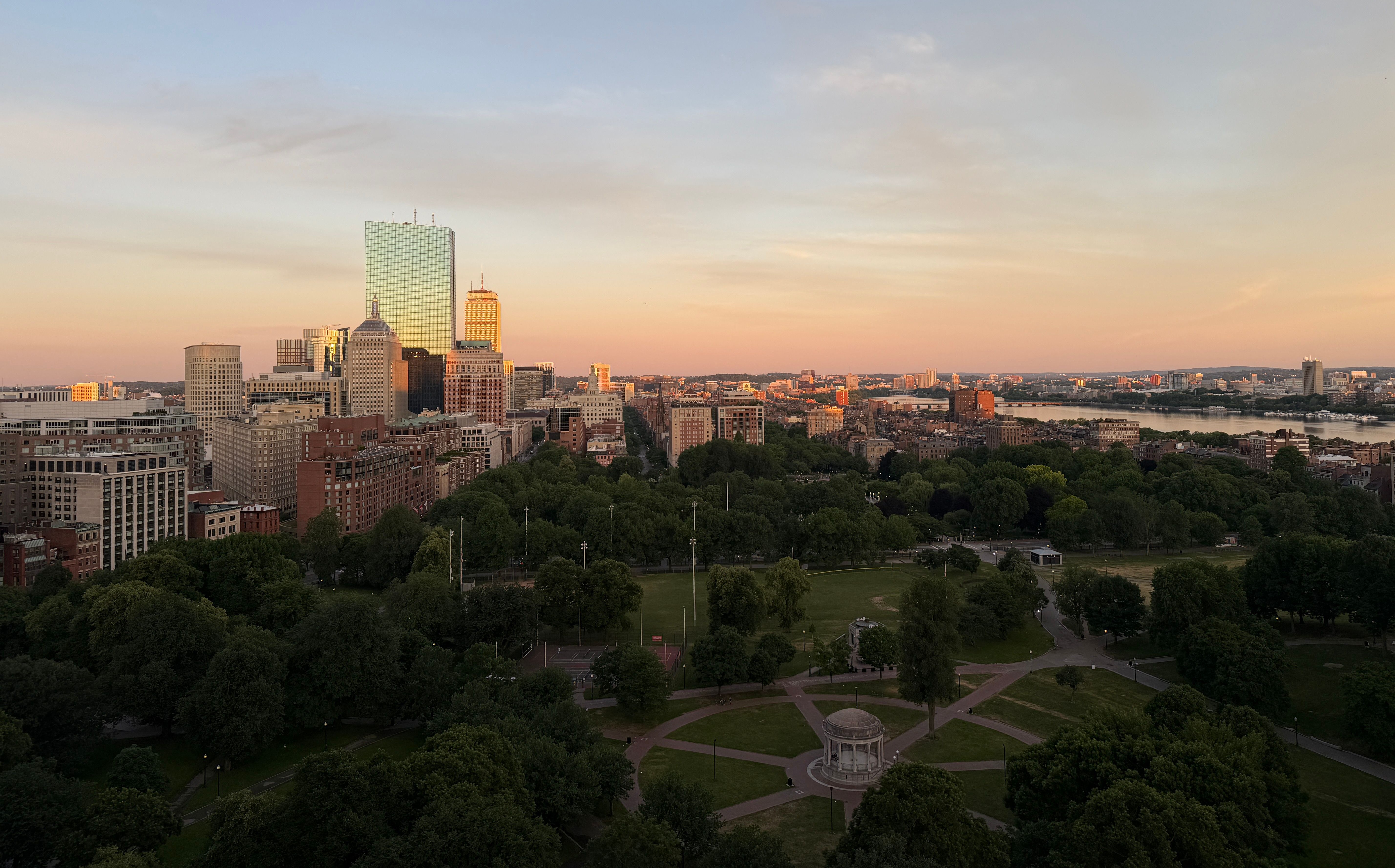
William James College is located in Newton, Mass., which is only about ten miles from Boston. Because of the proximity, many of our students live, work, and spend their free time in Boston, a city full of history, sports, culture, and more. If you’re new to the area, we dove into our top seven reasons why we love the city of Boston (and why you should too!).
1. The History
One of the most iconic elements of Boston is the history that you’ll find throughout the entire city. Officially settled in 1630 by the Puritans, Boston has nearly 400 years of history to explore, which doesn’t even include the thousands of years the Massachusett Tribe lived on the land. Of the many American historical events, the most prominent in (and closely associated with) Boston is the American Revolution. Often considered the “Birthplace of the American Revolution,” Boston is the site of famous events including the Boston Massacre, Boston Tea Party, Paul Revere’s Midnight Ride, and the Battle of Bunker Hill (which really took place on the neighboring Breed’s Hill).
Today, you can still visit many of the significant sites from the Revolution and beyond (and likely see fully dressed Minutemen or 18th-century-costumed tour guides on your travels!). The Freedom Trail is a 2.5-mile red brick line that connects museums, churches, burying grounds, and other iconic historical sites throughout the city. Follow its path to visit places like the Massachusetts State House, Old Corner Bookstore, Faneuil Hall, the Old North Church, and the USS Constitution.
There is no shortage of tours and museums for you to explore. From the Boston Tea Party Ships & Museum, the Museum of African American History, or the Massachusetts Historical Society to nighttime ghost tours, walking culinary tours, or the beloved Duck Tours that bring you by land and by sea (well, the Charles River), you will be fully immersed in Boston history. Want to learn more about the famous writers and poets who lived in Boston? Curious about the Great Molasses Flood that locals still swear makes the North End smell like molasses on a hot day? Whatever your interest, you can find some piece of history to enjoy.
2. The Sports
From the legendary 2004 World Series win by the Red Sox to the two-decade-long Patriots dynasty that earned the franchise six Superbowl rings, the sports culture around Boston is impressive and the fans are dedicated. We challenge you to walk through the city without spotting a Red Sox hat or Celtics jersey!
In the professional sports sphere, Boston has teams in all five major leagues: the Boston Red Sox (MLB), Boston Bruins (NHL), Boston Celtics (NBA), New England Patriots (NFL), and New England Revolution (MLS), plus professional women’s teams in soccer and hockey (The Boston Fleet made it to the PWHL semifinals this year and the Boston Legacy FC recently began their inaugural season!). If you prefer college sports, you might be interested in the Beanpot Hockey Tournament (an annual ice hockey tournament between Boston University, Boston College, Harvard, and Northeastern University) or the Fenway Bowl (an NCAA Division I Football Bowl Subdivision game played at Fenway Park every year).
Even if you have allegiances to other sports teams, being surrounded by Boston and New England sports culture is a unique experience. Fenway Park is the oldest major league baseball stadium in the United States where half the fun is enjoying the history, marveling at the Green Monster, and getting a “Fenway Frank.” Boston is also home to prestigious, world-wide events like the Head of the Charles Regatta, which is a three-day rowing competition, and the Boston Marathon, one of the major world marathons that brings around 30,000 runners and 500,000 spectators along the 26.2-mile route from Hopkinton to Boston. Plus, as one of the host cities for the 2026 FIFA World Cup, Boston is welcoming soccer fans from all across the globe this summer!
3. The Food
Boston is one of only five U.S. state capitals located on the ocean, which means our food recommendations for the city are, of course, starting with the seafood. The cold Atlantic waters are the perfect environment for fish and shellfish like cod, haddock, lobsters, scallops, clams, and oysters. Staples for the area are our creamy New England Clam Chowder (no tomatoes—looking at you, New York) or a classic, over-stuffed lobster roll, served either cold with mayo or hot with butter.
Boston and New England are home to other unique, regional foods that those not from the area might scratch their heads at. Maybe you’ve heard of Boston Cream Pie, which was invented at the Omni Parker House in 1856, but you will also find steak tips (small, marinated cuts of sirloin, perfect to pair with potatoes or vegetables, top a salad, or add to a sandwich), Scali bread (an Italian-American braided loaf of bread, covered with sesame seeds), a Fluffernutter (a peanut butter and marshmallow sandwich that has such a following there’s an annual Fluff Festival in Somerville, Mass.), and Greek-style pizza (an oiled, pan-baked pizza that has a slightly thicker focaccia-like crust). If you see a “House of Pizza,” you know you’ve found this Greek style!
As you explore Boston and its neighborhoods, you’ll find different cultural cuisines throughout the city. Head to the North End for some of the best Italian restaurants, cafés, and bakeries (no, we’re not getting in the middle of the long-standing cannoli debate). Or, check out Chinatown for a variety of Cantonese, Taiwanese, Sichuan, hot pot, dim sum, dumpling, noodles, and Asian fusion restaurants. Further from downtown, you can explore excellent Cabo Verdean, Vietnamese, and Haitian foods in neighborhoods like Mattapan, Dorchester, and Hyde Park. (Did you know Greater Boston is home to 58% of the nation's immigrants from Cabo Verde?)
There’s something for everyone in Boston. For those looking for a more casual pub atmosphere, head to one of the 49 Irish pubs, which one study found is more per capita than any other major Irish-immigrant city. Or, if you’re someone wanting a high-end dining experience, try 311 Omakase, a Japanese restaurant in the South End and Boston’s first and only Michelin star restaurant.
These highlights just scratch the surface. You will find more delicious and diverse options, including many Mediterranean, Middle Eastern, Persian, Indian, Korean, Caribbean, and Latin American restaurants, throughout Boston and in the surrounding areas.
4. The Arts
From art to theatre to music and more, you will find rich opportunities to explore the arts around Boston. Check out the many museums throughout the city like the Museum of Fine Arts, the Institute of Contemporary Art, the Athenaeum (which is actually a museum, library, and cultural center all in one!) or Isabella Stewart Gardner Museum—if you want a rabbit hole to dive into, read about the Isabella Stewart Gardner Museum theft of 1990, which still remains unsolved to this day. For a more interactive experience, head to places like the Museum of Science, the Boston Children’s Museum, or the New England Aquarium (there’s even a Museum of Ice Cream!). You can also discover architecture throughout the city with a boat tour or a visit to the Boston Society for Architecture for exhibitions and public programming.
If music, theatre, or comedy are more your style, you will find no shortage of shows in Boston. The Theatre District is located near Boston Common and has many theaters including the historic Boston Opera House or the Boch Center that is also home to the Folk Americana Roots Hall of Fame. You will find a wide variety of musicals, plays, concerts, comedy shows, dance performances, and other events throughout the year—like the Boston Ballet’s annual performance of the Nutcracker or the free Shakespeare on the Common productions in the summer. Further from the Theatre District, you can experience the Boston Symphony Orchestra at Symphony Hall in Back Bay; attend concerts ranging from smaller, more intimate performances to sold out shows at Fenway Park or TD Garden; and find many local bands and musicians to support at restaurants and bars across the city.
5. The Culture
Boston is home to a wide variety of cultural centers, festivals, and celebrations for residents and visitors to enjoy. Currently, Boston has four official cultural districts—Fenway, Roxbury, Latin Quarter, and Boston Little Saigon—but you will find rich culture throughout the entire city. The many cultural centers serve as gathering spaces, museums, libraries, educational organizations, and support systems. Just some throughout Boston include the newly opened Toussaint Louverture Cultural Center for Haitian heritage, the Vilna Shul Jewish cultural center and historic synagogue, the Pao Arts Center for the AAPI community, the Greater Roxbury Arts and Cultural Center, the French Library, the North American Indian Center of Boston, and the Inquilinos Boricuas en Acción (which is the largest Latina-led nonprofit organization in New England).
These and other organizations host many festivals and celebrations throughout the year. Access Boston Festival is a Native American cultural event hosted at City Hall Plaza every fall. Festival Betances is New England’s longest-running Latino cultural festival. The annual Boston Hong Kong Dragon Boat Festival was the first of its kind in North America. And the North End hosts a feast for St. Anthony and St. Lucy in late August every year.
Of course, these are only a few of the many, many events Boston has to offer. There’s a Boston Pride Festival and Parade every year, a film festival in September, countless food festivals, a three-day Harborfest to celebrate the Fourth of July and the city’s maritime and revolutionary history, and so much more you’ll have to experience for yourself!
6. The Outdoor Spaces
In 2018, Boston became the second major city to prioritize access to outdoor spaces by ensuring 100% of residents live within a 10-minute walk to a park. Most famous is the Boston Common (the oldest public park in the United States!) and the adjacent Public Garden (first public botanical garden!). Here you can skate on Frog Pond in the winter, ride the Swan Boats in the summer, and explore famous statues, art installations, and memorials. Keep an eye out for the Make Way for Ducklings sculpture, George Washington statue, The Embrace sculpture, and the Boston Massacre/Crispus Attucks Memorial.
The outdoor offerings of Boston don’t end there. You can walk, jog, or bike through miles of trails and green spaces throughout the city. The Emerald Necklace park system is a 7-mile network that connects nine parks and parkways in Boston, including Boston Common and Public Garden, Franklin Park (the city’s largest park that houses the Franklin Park Zoo), and the Arnold Arboretum where you can explore plants, nature, and wildlife with free guided tours, family activities, and seasonal events throughout the year.
Or, head towards the Charles River and check out the Esplanade where the famous Edward A. Hatch Memorial Shell is (home of the Boston Pops Fourth of July Celebration), or meander through the more than 40-mile Harborwalk along the water that connects parks, beaches, historical sites, and art pieces. You can also take the ferry and explore the Boston Harbor Islands National and State Park, the largest recreational space in Eastern Massachusetts that is made up of 34 different islands and peninsulas.
7. The Educational Opportunities
Education has always been at the heart of Boston. Harvard University (though technically located in the neighboring Cambridge), was founded in 1636 and is the oldest university in the United States. Boston Latin School, founded in 1635, was the first public school in America. And, the Boston Public Library was the first large free municipal library in the country when it was established in 1848. Today, it has 26 locations and is the third-largest public library in the United States with its more than 23 million items (following only the federal Library of Congress and New York Public Library).
Maybe we’re biased, but the educational opportunities of Boston and the surrounding areas are one of the best parts of this city. William James College has connections with over 200 field sites including schools, hospitals, VA centers, clinics, non-profits, community centers, and other organizations that provide incredible hands-on training for our students. Outside of your program at WJC, you will find nearly endless educational opportunities. With dozens of colleges and universities in Boston, and many more throughout Greater Boston, you can find continuing education classes, free lectures, in-person workshops, and much more. If you’re interested in a particular hobby, look into an art, cooking, dance, language, or other crafting class to take. Many of the museums or libraries in the city also offer workshops, talks, or community events for a variety of ages on virtually any topic you can imagine—and many of them are free!
Have we convinced you yet?! If you’re ready to take the leap, get started on an application or visit our Dean of Students page for housing resources and more information on living in Greater Boston.
Topics/Tags
- Admissions Blog
- Faculty/Staff
- Alumni
- Students
- Partner Spotlight
- Expert Insights
- Press Release
- 50th Anniversary
Follow William James College
Media Contact
- Katie O'Hare
- Senior Director of Marketing and Communications
- katie_ohare@williamjames.edu
- 617-564-9389