
Why Men’s Mental Health Matters
Between dads and grads, June arrives wrapped in celebration—but there’s another observance woven into the month that deserves just as much attention: Men’s Mental Health Awareness. In communities across the country, it’s a conversation that often unfolds quietly if it happens at all. Men’s mental health challenges remain widely underreported, shaped by stigma, cultural expectations, and a nationwide shortage of behavioral health providers that can make seeking help feel out of reach. Still, access is just one piece of a much larger puzzle.
Breaking the Silence Around Men’s Mental Health
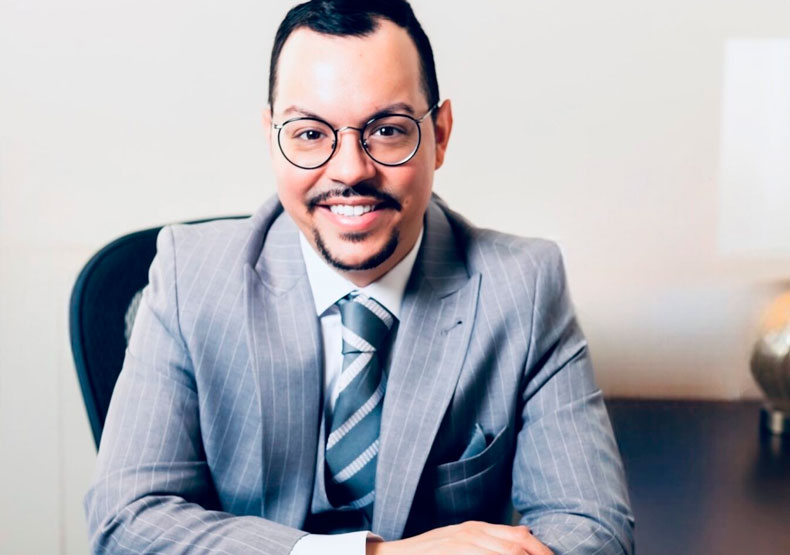
“It’s really hard to expect for men to get into the nitty-gritty required to do the psychotherapeutic work when, from a global standpoint, doing so remains underappreciated,” says Juan E. Rosario Jr., PsyD, pointing to widespread expectations surrounding what masculinity is and what it should look like. When these pressures present a hurdle among the men he serves, as a bilingual neuropsychology fellow he takes a strengths-based approach to treatment that includes providing psychoeducation (about what therapy is and the many ways it can look) and building rapport.
“Learning what someone values, what brings them joy, and where they feel appreciated are all protective factors that can be leveraged in the therapy room,” says Rosario, an adjunct professor in the Latino Mental Health Program (LMHP), underscoring that being in community keeps folks healthy. Because men are prone to isolating themselves and suffering in silence, the supports already in place prove powerful tools when it comes to navigating challenges like severe depression or anxiety.
“When an individual is in pain, the mind and body want to retreat,” says Rosario, in a nod to the protective instinct among all humans. Through therapy, he reminds patients that the bridge back to connection often lies in a community of folks who cherish, appreciate, and make them feel safe—whether that’s at the gym, on a sports team, at home, or in another subculture to which they belong. Once rapport has been established, Rosario seeks to better understand what an individual’s upbringing looked like, how their family dynamics unfolded, and what the familial expectations were surrounding masculinity among other things.
“Unpacking these factors helps patients to better understand how they view themselves relative to other men and why they respond the way they do,” says Rosario of the role schemas play in the process. At the neuro-behavioral level, helping individuals understand that they defer to these learned behaviors and coping mechanisms helps to interrupt the cycle of blame. In other words, one’s upbringing does not define them. In Rosario’s experience, utilizing a solutions-based modality like cognitive behavior therapy coupled with coaching and motivational interviewing gets men comfortable enough to examine the difficulties they are experiencing and seek to better understand why.
When Culture, Language, and Access Become Barriers
Among men of color, additional barriers abound. Finding providers who are multiculturally and linguistically sensitive tops the list. “There are a very limited number of psychologists who identify as Latino and are Spanish speaking,” says Rosario, adding that fewer than 10% of all providers are able to offer services in a language other than English—something the 2024 graduate of the PsyD in Clinical Psychology and MA in Professional Psychology programs hopes to see change. A passion for social justice led Rosario, who identifies as a Latino of Caribbean descent, to join the Latino Mental Health concentration. Bridging the gap between opportunity and access keeps him rooted in the work.
“Making psychotherapy, neuropsychological assessment, and mental health care affordable and accessible to all is my goal,” says Rosario who, while a student in the LMHP concentration, was professionally trained to provide psychotherapy and neuropsychological assessment in the Spanish language. Today, Rosario is on the other side of the lectern helping the next generation of providers in training gain the skills needed to meet the evolving mental health needs of society.
In the classroom, he focuses on those disparities and multicultural differences that exist even within the Latino population and why providing thorough assessment is especially important. “Doing so allows a provider to better understand an individual’s world view and the difficulties they are experiencing,” says Rosario, who reminds students that early versions like the Diagnostic and Statistical Manual of Mental Disorders were pieced together without a multicultural perspective in mind. Understanding what’s normative for the individual is most valuable in order to avoid over pathologizing or misdiagnosing patients—which is equally true for men.
What Healing and Support Can Look Like
The good news? Awareness surrounding men’s mental health starts with conversation. And while the men in our lives deserve support every month of the year, June offers a timely reminder to check in, speak up, and rethink what strength really looks like.
“As a society, we're actively demystifying men’s mental health by normalizing conversations about it—in newsletters, on podcasts, and among celebrities—which makes the pursuit of mental health treatment for men less taboo,” says Rosario who emphasizes the value of mental health treatment for men. Psychotherapy can help men become more attuned to the emotions they’re experiencing and how they manifest; it teaches the skills and strategies needed for men to regulate their behavior; and it can help men inform and enhance relationships both personally and professionally.
“When someone understands themselves better, they are more likely to feel comfortable engaging with others,” says Rosario, demonstrating how increased awareness surrounding men’s mental health benefits everyone. Given the increased demands placed on them—at work and at home—men can be prone to engaging in self-destructive behaviors like gambling, using substances, or engaging in self-harm. From Rosario’s perspective, the right psychotherapeutic relationship is an invaluable hub of resources.
“Psychotherapy helps keep patients safe, it helps monitor behaviors, and—with time—it elicits change,” says Rosario. He hopes that, as conversations around men’s mental health continue to grow louder and more visible, increasing numbers of men will recognize themselves in those discussions—and feel empowered to seek support without shame.
- Tags:
- In the Community
Topics/Tags
- Admissions Blog
- Faculty/Staff
- Alumni
- Students
- Partner Spotlight
- Expert Insights
- Press Release
- 50th Anniversary
Follow William James College
Media Contact
- Katie O'Hare
- Senior Director of Marketing and Communications
- katie_ohare@williamjames.edu
- 617-564-9389